Difference Between AI and Robotics: Which Is Better for Your Career in 2026?
Summary
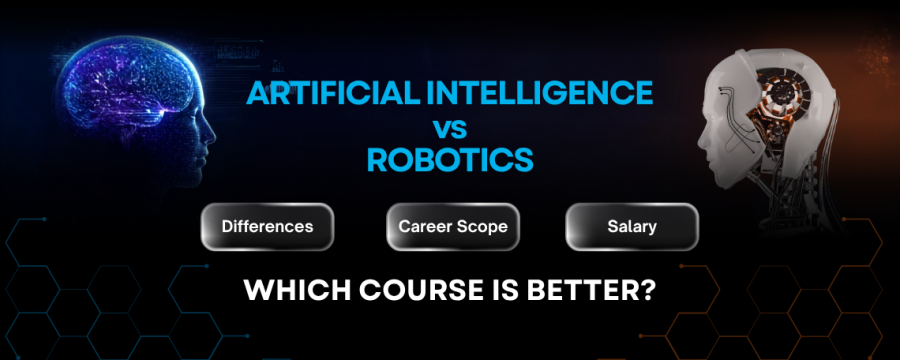
Choosing between Artificial Intelligence (AI) and Robotics can shape your career in exciting ways. While these fields often overlap, they are not the same. AI focuses on creating intelligent systems that can learn, reason, and make decisions, whereas robotics involves designing and building machines that perform physical tasks. Understanding the difference between AI and robotics can help you choose the right academic programme and career path. Whether you enjoy coding, data analysis, electronics, or automation, both fields offer excellent opportunities across industries in 2026 and beyond.
What Are Artificial Intelligence and Robotics?
Artificial Intelligence (AI) is a branch of computer science that enables machines to mimic human intelligence. AI systems learn from data, recognise patterns, make predictions, and improve their performance over time. Technologies such as machine learning, deep learning, natural language processing (NLP), and computer vision fall under AI.
Robotics, on the other hand, is an interdisciplinary field that combines mechanical engineering, electronics, computer science, and control systems to build machines capable of performing physical tasks. Robots can operate independently or under human supervision, depending on their design and purpose.
Although people often ask, "Are robots and AI the same thing?", the answer is no. Robotics focuses on the physical machine, while AI focuses on intelligence and decision-making. AI can power robots, but not all robots use AI.
AI vs Robotics: Key Differences at a Glance
Understanding the difference between robotics and artificial intelligence becomes easier through a side-by-side comparison.
| Aspect | Artificial Intelligence | Robotics |
|---|---|---|
| Primary focus | Developing intelligent software and algorithms | Designing and building physical machines |
| Objective | Enable machines to think, learn, and make decisions | Automate physical tasks efficiently |
| Core technologies | Machine Learning, NLP, Computer Vision, Deep Learning | Sensors, actuators, embedded systems, mechanical design |
| Output | Software models and intelligent applications | Robots and automated systems |
| Programming emphasis | High | Moderate to High |
| Hardware involvement | Limited | Extensive |
| Common applications | Virtual assistants, recommendation systems, fraud detection | Manufacturing, healthcare, warehouses, agriculture |
This comparison clearly explains the AI vs robotics debate. While both fields involve technology and automation, their objectives and skill sets differ significantly.
How AI and Robotics Work Together
AI and robotics complement each other in many real-world applications. Robotics provides the physical body, while AI acts as the brain. For example:
- Self-driving vehicles use AI to recognise traffic signs, detect pedestrians, and make driving decisions, while robotic systems control steering, acceleration, and braking.
- Surgical robots use AI-assisted image analysis alongside robotic precision for minimally invasive procedures.
- Warehouse robots navigate shelves, identify products, and optimise delivery routes using AI algorithms.
- Agricultural robots monitor crop health, identify weeds, and automate harvesting with the help of AI-powered vision systems.
Without AI, many robots simply follow pre-programmed instructions. With AI, they become capable of learning, adapting, and responding to changing environments
Applications of Artificial Intelligence and Robotics
AI and robotics are transforming industries by improving efficiency, accuracy, and productivity.
Applications of Artificial Intelligence
AI is widely used in:
- Healthcare diagnostics
- Financial fraud detection
- Chatbots and virtual assistants
- Recommendation systems
- Language translation
- Autonomous software agents
- Predictive analytics
- Cybersecurity
Applications of Robotics
Robotics plays a vital role in:
- Industrial automation
- Medical surgeries
- Logistics and warehousing
- Agriculture
- Defence operations
- Space exploration
- Construction
- Disaster response
Many advanced solutions combine AI and robotics to create intelligent automation systems capable of handling complex tasks.
Skills Required to Build a Career in Artificial Intelligence and Robotics
Both career paths require strong technical foundations, but the skill requirements differ.
Skills for Artificial Intelligence
Students interested in AI should develop knowledge in:
- Python and programming fundamentals
- Mathematics and statistics
- Machine learning
- Deep learning
- Data science
- Natural language processing
- Cloud computing
- Data visualization
Skills for Robotics
Students pursuing robotics should learn:
- Mechanical engineering basics
- Electronics and electrical systems
- Embedded programming
- Control systems
- Sensors and actuators
- CAD and simulation tools
- Robot Operating System (ROS)
- Computer vision
Common skills beneficial for both fields include:
- Problem-solving
- Analytical thinking
- Team collaboration
- Communication
- Innovation
- Project management
Courses and Educational Pathways for AI and Robotics
Students can pursue specialised undergraduate and postgraduate programmes depending on their interests. Popular academic pathways include:
- B.Tech. in Artificial Intelligence
- B.Tech. in Artificial Intelligence and Machine Learning
- B.Tech. in Robotics and Automation
- B.Tech. in Electronics and Communication Engineering
- B.Tech. in Computer Science Engineering
- M.Tech. in Robotics
- M.Tech. in Artificial Intelligence
- Certification programmes in Machine Learning, Data Science, or Robotics
A multidisciplinary curriculum that combines theoretical knowledge with laboratory work, research, internships, and industry exposure prepares students for emerging technologies and future careers.
Career Opportunities in Artificial Intelligence and Robotics
Both AI and robotics offer diverse career opportunities across industries.
Careers in Artificial Intelligence
Graduates can work as:
- AI Engineer
- Machine Learning Engineer
- Data Scientist
- NLP Engineer
- Computer Vision Engineer
- AI Research Scientist
- AI Product Manager
- Business Intelligence Analyst
Careers in Robotics
Robotics graduates may pursue roles such as:
- Robotics Engineer
- Automation Engineer
- Mechatronics Engineer
- Robotics Software Developer
- Control Systems Engineer
- Embedded Systems Engineer
- Robotics Research Scientist
- Industrial Automation Specialist
Industries hiring professionals include healthcare, automotive, aerospace, manufacturing, logistics, agriculture, defence, and smart infrastructure.
Salary, Demand, and Future Scope of AI and Robotics
Both AI and robotics continue to experience strong global demand due to rapid technological advancement. AI professionals are increasingly sought after in sectors such as finance, healthcare, IT, e-commerce, and cybersecurity. Robotics experts are essential in manufacturing, industrial automation, healthcare, logistics, and autonomous systems.
Factors influencing salary include:
- Educational qualifications
- Technical skills
- Certifications
- Industry
- Geographic location
- Experience level
As organisations invest more in intelligent automation, both fields are expected to generate significant employment opportunities over the coming years.
AI vs Robotics: Which Is Better for You?
Many students wonder about AI vs robotics: which is better. The answer depends on your interests, strengths, and career goals.
Choose Artificial Intelligence if you enjoy:
- Programming
- Mathematics
- Data analysis
- Machine learning
- Software development
- Building intelligent application
Choose Robotics if you enjoy:
- Designing machines
- DElectronics
- DMechanical systems
- DAutomation
- DEmbedded programming
- DWorking with hardware
If you are equally interested in software and hardware, consider programmes that integrate AI with robotics, allowing you to build intelligent autonomous systems.
Final Thoughts – Choosing Between AI and Robotics Based on Your Career Goals
The difference between AI and robotics lies in their focus, but both fields are interconnected and equally valuable. AI develops intelligent decision-making systems, while robotics creates machines capable of interacting with the physical world.
Rather than asking whether robot vs AI is better, students should evaluate their interests, career aspirations, and preferred learning style. With the growing adoption of automation, intelligent systems, and smart technologies, both disciplines offer rewarding academic pathways and long-term career prospects.
Choosing the right programme at a university that combines interdisciplinary learning, research, practical experience, and innovation can provide the strong foundation needed to thrive in these rapidly evolving fields.