Programs
MCA Cloud Computing & DevOps
MCA Cloud Computing & DevOps
Embark on an advanced journey into the transformative fields of Cloud Computing and DevOps with the Master of Computer Applications (MCA) program at S-VYASA Global City Campus. This program is meticulously designed to equip students with the skills and knowledge necessary to leverage cloud technologies and DevOps practices for building scalable and efficient software solutions.
The programme is offered under the School of Computer Science and Applications, where students benefit from a strong technical foundation, research-driven learning, and industry-aligned training in emerging computing technologies.
Eligibility
- Passed any graduation degree (e.g.: B.E. / B.Tech./ B.Sc / B.Com. / B.A./ B. Voc./ BCA etc.,) preferably with Mathematics at 10+2 level or at Graduation level.
- Obtained at least 50% marks (45% marks in case of candidates belonging to reserved category) in the qualifying examination.
- (for students having no Mathematics background compulsory bridge course will be framed by the respective University/ Institution and additional bridge courses related to computer subjects as per the norms of the concerned University).
Program Highlights
Comprehensive Cloud Computing Curriculum:
Explore a comprehensive curriculum covering the principles, technologies, and services of Cloud Computing, including Infrastructure as a Service (IaaS), Platform as a Service (PaaS), and Software as a Service (SaaS).
Real-world Projects:
Engage in hands-on projects and case studies, applying Cloud Computing and DevOps principles to solve real-world challenges.
DevOps Principles and Practices:
Gain expertise in DevOps principles and practices, including continuous integration, continuous deployment, and automation of software development and IT operations.
Industry Expert Faculty:
Benefit from the guidance of experienced faculty members and industry experts with practical insights into Cloud Computing and DevOps practices.
Cloud Infrastructure Management:
Learn to manage and optimize cloud infrastructure using leading cloud platforms, ensuring scalability, security, and cost-effectiveness.
Collaboration with Industry Leaders:
Leverage collaborations with leading companies and professionals in the Cloud Computing and DevOps domain, ensuring alignment with industry standards.
DevOps Toolchain:
Acquire proficiency in using popular DevOps tools and frameworks for version control, build automation, and deployment orchestration.
Career Opportunities:
Graduates of this program will be well-prepared for roles such as Cloud Solutions Architect, DevOps Engineer, Cloud Infrastructure Manager, and other high-demand positions in the Cloud Computing and DevOps landscape.
Career Outcome
Cloud Solutions Architect:
Design and implement scalable and efficient cloud solutions, considering infrastructure, platforms, and services.
DevOps Engineer:
Implement and automate DevOps practices, ensuring smooth collaboration between development and operations teams.
Cloud Infrastructure Manager:
Oversee and optimize cloud infrastructure, managing resources and ensuring scalability, security, and cost-effectiveness.
CI/CD Specialist:
Implement and maintain CI/CD pipelines, automating the software development and deployment processes.
Cloud Security Specialist:
Focus on ensuring the security of cloud environments, implementing best practices and solutions for data protection.
Site Reliability Engineer (SRE):
Ensure the reliability and availability of software systems, combining software engineering with IT operations.
DevOps Consultant:
Provide consultancy services to organizations on implementing DevOps practices for enhanced efficiency and collaboration.
Cloud Platform Administrator:
Manage and administer cloud platforms, ensuring smooth operation and optimal performance.
DevOps Toolchain Expert:
Specialize in the use and optimization of DevOps tools and frameworks for version control, build automation, and deployment orchestration.
Cloud Application Developer:
Develop and optimize applications specifically designed for cloud environments, leveraging cloud-native technologies.
Infrastructure as Code (IaC) Specialist:
Implement and manage infrastructure using code, automating the provisioning and configuration of resources.
Cloud Data Engineer:
Manage and optimize data pipelines in cloud environments, ensuring efficient and secure data storage, processing, and retrieval.
Graduates of the MCA Cloud Computing & DevOps program at S-VYASA are well-equipped for dynamic and high-impact roles in the ever-evolving field of cybersecurity.
At S-VYASA University, we recognize the transformative power of cloud technologies and DevOps in reshaping software development and IT operations.
FAQ's
Employers typically offer graduates in this domain packages ranging from ₹4 LPA to ₹10 LPA, based on skills, certifications, and internship experience. Professionals with 2–4 years of experience in roles like DevOps Engineer or Cloud Engineer often see their salaries grow significantly, reaching ₹12–20 LPA or higher.
This programme blends core computer science with specialised cloud and DevOps training. It usually covers programming, data structures, database management, cloud architecture (AWS/Azure), containerisation (Docker, Kubernetes), CI/CD pipelines, Linux administration, automation tools, and project-based learning that focuses on real-world deployment.
DevOps is a methodology that integrates software development (Dev) and IT operations (Ops). MCA focuses on automating workflows, accelerating software delivery, and enabling continuous integration and deployment using tools such as Jenkins, Git, Docker, and Kubernetes.
It depends on your career direction. MCA is suited for technical roles such as software development, cloud engineering, and DevOps. An MBA is better for management, leadership, and business-oriented roles. If you enjoy coding and technology, MCA is the more relevant choice.
This specialisation aligns with current industry demand, as organisations move to cloud-based infrastructure. It prepares students for roles in cloud architecture, automation, and scalable system management, making it highly industry-focused and future-ready.
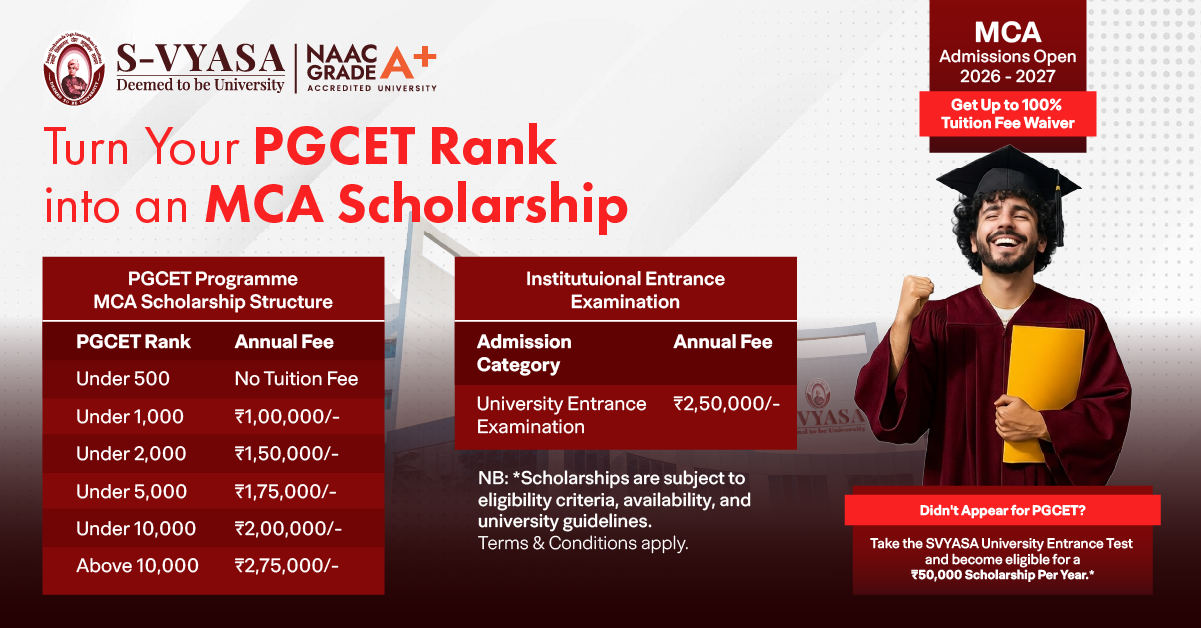
Admission typically requires a bachelor’s degree with a background in computer science or mathematics. Candidates need to apply through the university’s admissions portal, meet eligibility criteria, and may be required to take an entrance test or an interview.
While exact figures can vary by batch and individual performance, students can expect an average starting package of ₹4–8 LPA, with higher packages achievable for candidates with strong technical skills and certifications.